
Database Management for Beginners: Learn How Data Powers Everyday Technology
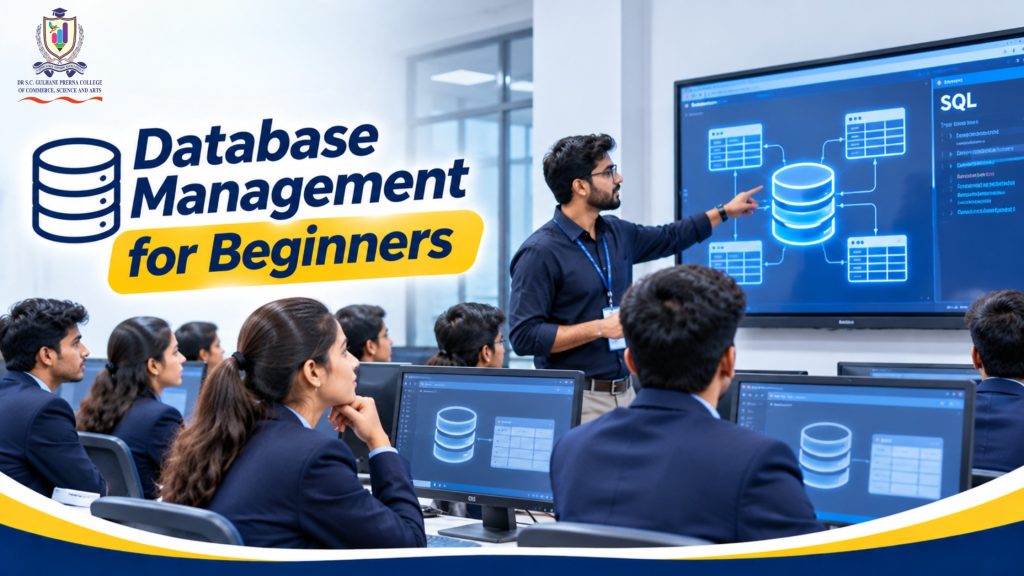
Database Management for Beginners is an important starting point for students who want to understand how modern technology stores, organises and uses information. From online shopping applications to railway ticket bookings, hotel reservations and banking services, almost every digital platform depends on properly organised data. Learning how databases work can help students develop valuable technical knowledge and prepare for opportunities in the growing IT industry.
In today’s digital environment, information is generated every second. Managing this information efficiently is essential for businesses, educational institutions and technology companies. This is where database management becomes useful.
What Is a Database and How Does It Work?
A database is an organised collection of information that can be stored, accessed, updated and managed whenever required. Instead of maintaining thousands of records in separate files, organisations use databases to keep information in a structured format.
For example, when someone books a train ticket online, the system stores details such as passenger names, journey dates, seat numbers and booking references. The database helps the platform retrieve and update this information whenever necessary.
A Database Management System (DBMS) is software that allows users to create, manage and control databases. It makes handling large amounts of information more convenient and reliable.
Different Types of Database Systems Students Should Know
Understanding different database systems helps beginners recognise how information is managed across industries.
- Relational Databases:These organise information into tables containing rows and columns. MySQL and PostgreSQL are popular examples.
- NoSQL Databases:These manage flexible or unstructured information and are useful for applications handling different types of data. MongoDB is a common example.
- Cloud Databases:These allow businesses to store and access information through cloud infrastructure, supporting remote access and scalability.
- Hierarchical Databases:These organise information in a tree-like structure, where records follow parent-child relationships.
Each database type serves different purposes depending on the application and business requirements.
Why Database Technology Matters in Everyday Life
Database systems are not limited to software companies. They support several services people use regularly.
Consider the travel industry. When customers search for flights, hotels or holiday packages, booking platforms retrieve information from databases. They help display available seats, room details, prices and reservation histories.
Similarly, hospitals maintain patient records, colleges organise student information, and banks manage financial transactions through database systems.
These examples show how organised information supports faster services, better decision-making and improved customer experiences.
Essential Database Skills Every IT Student Should Develop
Students interested in building a career in information technology should begin with a few fundamental concepts:
- SQL Basics:Learn how to retrieve, insert, update and delete information using SQL commands.
- Table Management:Understand how tables, columns, rows and relationships work.
- Primary and Foreign Keys:Learn how different tables connect and maintain relationships.
- Data Security:Understand access permissions, backups and basic database protection.
- Practical Projects:Create simple databases for library records, student attendance or travel reservations.
Regular practice helps students understand how theoretical concepts are applied in actual software development.
Career Opportunities After Learning Database Management
Database knowledge can support several career paths in the technology sector. Beginners can gradually explore roles such as database administrator, SQL developer, data analyst, database support executive and backend developer.
With experience in programming, cloud platforms and data analysis, students can expand their technical capabilities and explore more specialised opportunities.
For Indian students, developing practical IT skills alongside academic knowledge can be a valuable step towards entering the competitive technology job market.
Build Your Technical Foundation for Tomorrow
Learning database concepts is not just about storing information; it is about understanding how digital systems communicate, operate and deliver services. Whether managing college records, supporting online travel bookings or developing business applications, databases remain an essential part of modern technology.
Students interested in computer applications and emerging digital technologies should build a strong foundation in database concepts through consistent learning and practical exposure. Developing these skills can open doors to exciting possibilities in the IT industry and prepare learners for a data-driven future.