
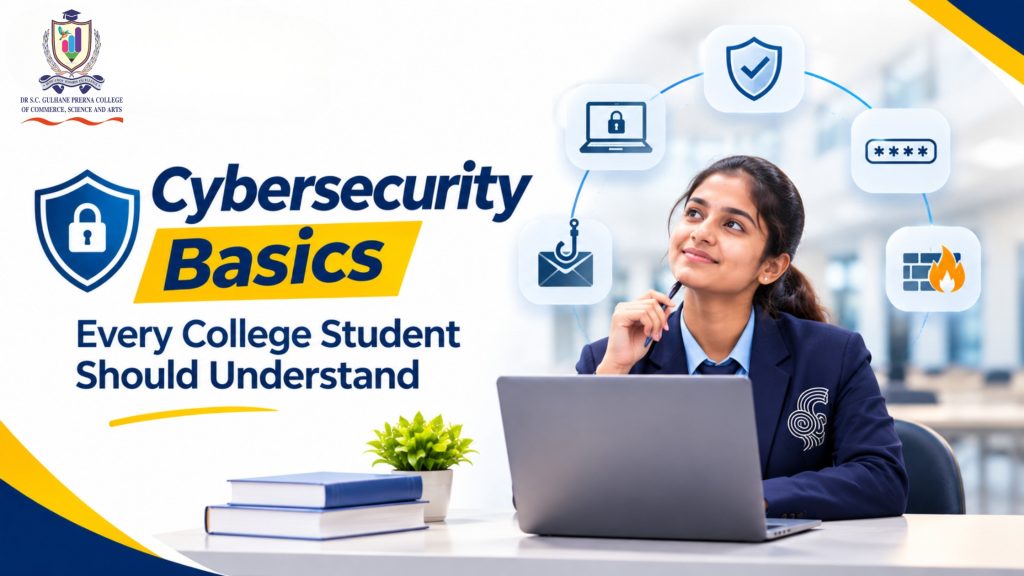
Cybersecurity Basics Every College Student Should Understand: A Guide to Staying Safe Online
Cybersecurity Basics Every College Student Should Understand is an essential topic in today’s digital-first education system. From attending online lectures and submitting assignments to making UPI payments and accessing social media, college students use the internet for almost everything. However, greater digital convenience also brings risks such as online scams, identity theft, phishing messages and data breaches.
Understanding cybersecurity does not require advanced technical knowledge. A few smart habits can protect personal information, academic records and financial accounts. Every student should develop these skills to become a responsible digital citizen.
Why Digital Security Awareness Matters for Students
College life involves using multiple digital platforms every day. Students frequently access college portals, email accounts, cloud storage, educational applications and public Wi-Fi networks.
A single careless click on a suspicious link can expose sensitive information. Cybercriminals may use fake scholarship notifications, internship offers, examination updates and attractive job opportunities to trick students.
Digital security awareness helps students recognise suspicious online activities, protect their personal details and make informed decisions before sharing information.
Strong Password Protection for Online Accounts
Passwords are the first line of defence for most online accounts. Using the same password for email, banking applications and social media increases the risk of multiple accounts being compromised.
Students should follow these simple practices:
- Create long, unique passwords for different accounts.
- Avoid using birthdays, mobile numbers or easily guessed names.
- Consider using a trusted password manager.
- Enable two-factor authentication wherever available.
- Never share passwords or OTPs, even with someone claiming to represent a bank or institution.
A strong password combined with additional authentication makes unauthorised access more difficult.
Identifying Phishing Scams and Suspicious Links
Phishing is a common online scam in which attackers pretend to represent trusted organisations to steal personal information.
For example, a student might receive an email claiming that their scholarship application has been rejected unless they immediately verify their bank details. Another message might promise an internship after clicking an unfamiliar link.
Before responding, check the sender’s email address, website domain and message details. Avoid downloading unexpected attachments or sharing confidential information through unverified links.
Remember that genuine organisations do not need your OTP or password to verify your identity.
Safe Internet Browsing and Public Wi-Fi Habits
Free Wi-Fi at railway stations, cafés, libraries and other public places can be convenient for students. However, unsecured networks may expose users to privacy and security risks.
Avoid accessing banking applications or performing sensitive transactions on unfamiliar public networks. Check that websites use HTTPS before entering personal information. Keep your browser and operating system updated, and download applications only from trusted sources.
When using shared computers in libraries or laboratories, always log out of personal accounts and avoid saving passwords.
Protecting Personal Data on Social Media
Social media platforms allow students to connect, communicate and showcase achievements. However, sharing too much personal information can create unnecessary privacy risks.
Avoid publicly posting identity documents, financial details, examination credentials, live location information or private contact details.
Review account privacy settings regularly and think carefully before accepting unknown friend requests. Students should also understand that photographs, comments and uploaded documents can remain accessible even after deletion.
Cybersecurity Skills and Career Opportunities in India
Cybersecurity is an important part of the modern technology industry. Organisations across banking, education, healthcare, e-commerce and government services depend on secure digital systems.
Students interested in technology can gradually develop knowledge of computer networks, operating systems, programming, data protection and information security.
At Dr. S. C. Gulhane Prerna College of Commerce, Science and Arts, students can explore computer-focused programmes such as BCA, B.Sc. Computer Science and B.Sc. Information Technology. These programmes provide foundations in computing, programming and related technical concepts.
Students can strengthen their understanding through practical projects, workshops, industry exposure and independent learning.
Build Safer Digital Habits for a Better Future
Cybersecurity is not just the responsibility of IT professionals. Every college student has a role in maintaining a safer digital environment.
Think before clicking, protect your passwords, verify online information and keep your devices updated. Most importantly, never ignore suspicious digital activity.
Developing cybersecurity awareness during college can protect students today while preparing them for tomorrow’s professional responsibilities. Start building these habits now and make digital safety a regular part of your academic and personal life.
Explore the academic programmes at Prerna College, Nagpur, and take the next step towards building your knowledge and skills for a technology-driven future.